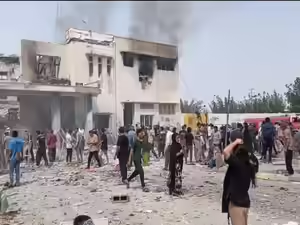
The conflict between Israel and Iran took a dramatic turn when Israeli Air Force jets launched targeted airstrikes deep inside Iranian territory, focusing on high-value military and defence installations. According to Israeli claims, the operation resulted in the elimination of seven top Iranian defence officials, representing a severe setback to Tehran’s military leadership.
Among those reportedly killed were key figures such as Ali Shamkhani, Mohammad Pakpour, and several other senior officials linked to Iran’s defence and intelligence infrastructure. These individuals played critical roles in shaping Iran’s military strategy, overseeing operations, and coordinating national security efforts.
The strikes were described as “precise” and targeted, indicating a high level of intelligence penetration and operational planning by Israel. This aligns with a broader strategy seen throughout the conflict, where Israel has focused on decapitating Iran’s leadership to disrupt its command-and-control systems.
However, Iran has not officially confirmed the deaths of all the individuals named by Israel, highlighting the ongoing information gap and conflicting narratives that characterize the conflict.
The attack follows a series of escalating hostilities, including missile launches from Iran toward Israel and retaliatory strikes by Israeli forces. This cycle of action and counteraction has pushed the region closer to a wider war, with both sides targeting not just military infrastructure but also leadership figures.
Strategically, the killing of senior defence officials is intended to weaken Iran’s operational capabilities and slow down its response mechanisms. However, historical patterns suggest that such actions may not fully dismantle Iran’s military structure, as the country has a layered and resilient command system capable of quickly replacing leadership.
In conclusion, the airstrikes represent a critical escalation in the Iran–Israel conflict, signaling a shift toward high-value targeted operations. While the immediate impact is a disruption of Iran’s defence leadership, the long-term consequences may include intensified retaliation, prolonged instability, and a deeper regional crisis.