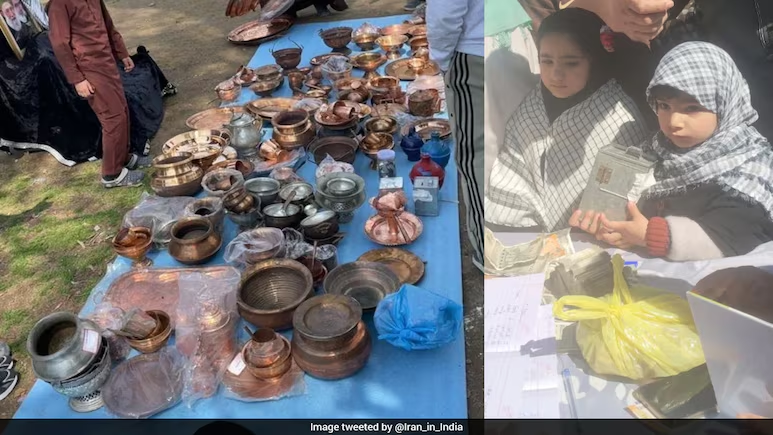
Amid the escalating conflict in West Asia, a remarkable humanitarian movement has emerged from Kashmir, where communities have come together to extend support to the people of Iran. The initiative, primarily active in districts like Budgam and Baramulla, involves organized donation drives led by local volunteers who conducted door-to-door collections following Eid celebrations.
What sets this effort apart is not just the scale but the emotional depth behind the contributions. People have donated not only money but also gold and silver jewellery, copper utensils, livestock, and other valuable possessions. Women, in particular, have parted with personal jewellery, while children contributed their savings and Eid gifts—highlighting a collective sense of empathy and shared identity.
In some deeply moving instances, individuals donated items of strong sentimental value. One such case involved a widow offering a gold memento preserved for decades in memory of her late husband. These gestures underline that the initiative is driven not merely by charity, but by emotional and cultural connection to the crisis.
The Iranian Embassy in India publicly acknowledged these efforts through social media, thanking the people of Kashmir and emphasizing that their support represents “humanity and heartfelt solidarity.” The collected aid is expected to be routed through official channels to ensure it reaches those affected by the conflict.
This movement also reflects broader socio-political and cultural ties, as many participants view their contributions as a moral and humanitarian responsibility. The scale of participation—from children to public representatives—demonstrates how global conflicts can resonate deeply within local communities, prompting unified action.
Overall, the Kashmir donation drive stands as a striking example of grassroots humanitarianism, where compassion transcends borders, and ordinary citizens mobilize to respond to international crises with extraordinary generosity.