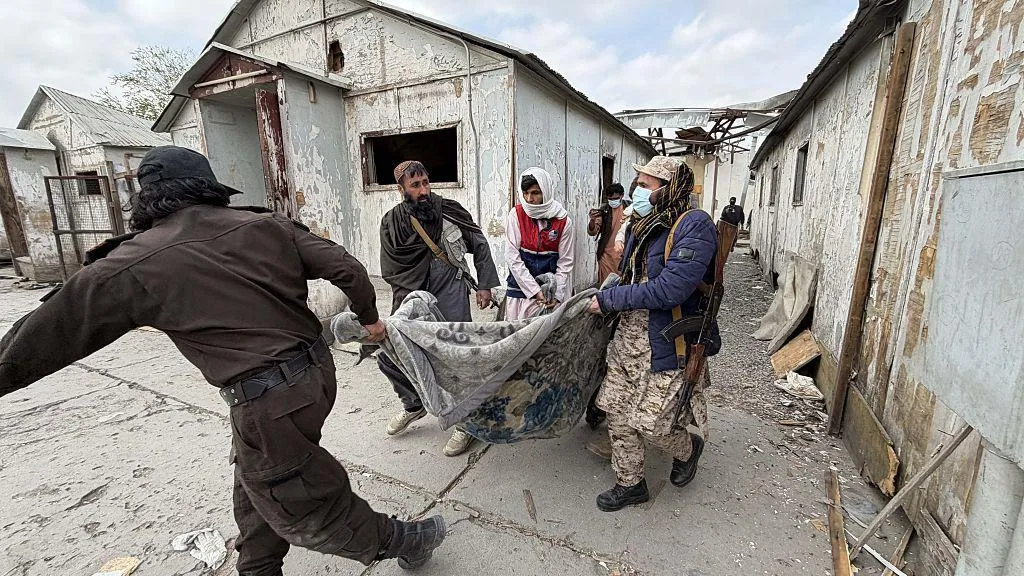
The recent escalation between Afghanistan’s Taliban-led government and Pakistan highlights a complex geopolitical conflict where information warfare plays a central role alongside military operations. Following a series of airstrikes and retaliatory actions, both nations have rushed to present their own versions of events, often contradicting each other.
For instance, after a major airstrike in Kabul, the Taliban accused Pakistan of targeting a civilian drug rehabilitation centre, claiming large-scale casualties and labeling the attack a violation of humanitarian norms. In contrast, Pakistan rejected these allegations, asserting that the strikes were aimed at terrorist infrastructure and militant hideouts, not civilians.
This divergence in narratives reflects a broader strategy where both sides attempt to control public perception—domestically and internationally. Social media has become a key battleground, with rapid dissemination of claims, counterclaims, and emotionally charged messaging. These efforts are designed not only to influence public opinion but also to gain diplomatic leverage and legitimacy.
Complicating the situation further is the lack of independently verified information. Casualty figures, targets, and the nature of attacks remain disputed, with international organizations sometimes providing partial confirmation but not always aligning with either side’s claims. This ambiguity fuels mistrust and intensifies the conflict.
Historically, Afghanistan and Pakistan have shared a volatile relationship, particularly along their border regions, where militant groups operate. However, the current phase marks a shift—where the conflict is not only about territorial or security concerns but also about controlling the narrative that defines the conflict itself.
In essence, the Afghanistan–Pakistan situation demonstrates how modern conflicts are fought on two fronts: the physical battlefield and the information space. The outcome of this narrative war could significantly influence international response, regional stability, and the future trajectory of the conflict.