The Middle East conflict involving Iran, Israel, and the United States has entered a new and volatile phase as Iran announced Mojtaba Khamenei as its new Supreme Leader. His appointment follows the death of his father, Ayatollah Ali Khamenei, who was killed during coordinated Israeli-U.S. airstrikes near Tehran at the start of the war on February 28, 2026.
Mojtaba Khamenei, a 56-year-old cleric with strong ties to Iran’s powerful Islamic Revolutionary Guard Corps (IRGC), was selected by the country’s Assembly of Experts, the body responsible for choosing Iran’s supreme leader. His rise to power signals that hardline leadership will continue to dominate Iran’s political system during the conflict.
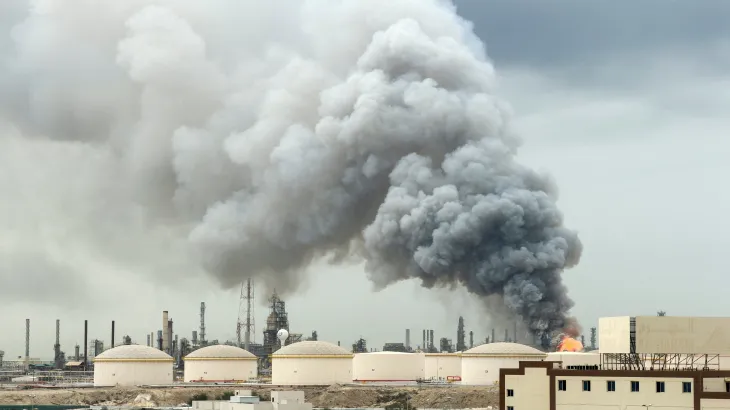
The leadership change comes at a time of intense military escalation. Israeli forces have launched repeated strikes targeting Iranian military installations, infrastructure, and strategic facilities in and around Tehran. Iran has responded with missile and drone attacks against Israel and against infrastructure connected to U.S. allies in the Gulf region.
According to reports, the war has already caused significant casualties and damage across several countries in the region. Iranian officials say many civilians have been killed in airstrikes, and healthcare facilities and infrastructure have been damaged.
The appointment of Mojtaba Khamenei has also sparked debate within Iran and internationally. Critics argue that the leadership transfer resembles a dynastic succession, something unusual in a republic that emerged from the 1979 Islamic Revolution. However, Iran’s political and military leadership has largely rallied behind the new leader, emphasizing national unity during wartime.
Meanwhile, tensions continue to rise across the Middle East. Missile exchanges, attacks on energy infrastructure, and military mobilizations are increasing fears that the conflict could expand into a wider regional war. Oil prices have already surged due to disruptions near critical shipping routes such as the Strait of Hormuz, highlighting the global economic impact of the crisis.
As the conflict continues, global powers and international organizations are closely monitoring developments, warning that further escalation could destabilize the region and affect global energy markets, security, and humanitarian conditions.